
New Button Senior Principal - PD

New Title

This is paragraph text. Click it or hit the Manage Text button to change the font, color, size, format, and more. To set up site-wide paragraph and title styles, go to Site Theme.

Contact Our Team
Candidate Application Pack

New Paragraph

New Paragraph

New Title

Public Law Branch
Multiple Opportunities

New Paragraph


Landmark Cases

Shape the boundaries of workplace law

Complex Matters. Real Impact.


At Crown Law, the Workplace Law team acts at the very centre of Queensland’s most significant employment and industrial relations issues. Representing the State across tribunals and courts, the team has been involved in landmark cases that shape the boundaries of workplace law in Australia.

Recent matters have included:

  • Whistleblower & retaliation claims – defending the State in high-profile disputes where executive decisions and workplace culture were scrutinised in the Queensland Industrial Relations Commission.
  • Harassment and discrimination disputes – managing sensitive and complex cases, including injunctions to protect reputations and ensure compliance with human rights obligations.
  • Psychiatric injury and workplace stress claims – successfully defending the State in appellate proceedings involving allegations of harm arising from disciplinary processes, union disputes, and workplace investigations.
  • Novel claims arising from flexible and remote work – advising on emerging issues, such as whether an injury sustained while working from home could be considered “work-related.”


These cases are rarely seen in private practice. They are high-profile, strategically significant, and often involve questions of law that set precedent across Queensland’s public sector.

Why Crown Law?

Breadth and Depth of Technical Experts

A team equivalent to the size of a medium to large sized firm

Diversity Matters

Where 64% of the leadership team are female

Real Impact

3,296 legal matters in 2023-24

Shaping Queensland's Future

Why This Team?

Make an Immediate Impact

Join the team behind Queensland’s most significant workplace law cases.


Thrive Through Collaboration

Work on matters that set precedent — with colleagues who have your back.


Achieve True Work-Life Balance

Big cases, balanced hours, and a team that delivers together.

Shape the Legal Landscape

Influence the future of workplace law in Queensland — without sacrificing balance.

Be Part of a Culture

Where complex work meets a collegial team environment.


Why Crown Law?

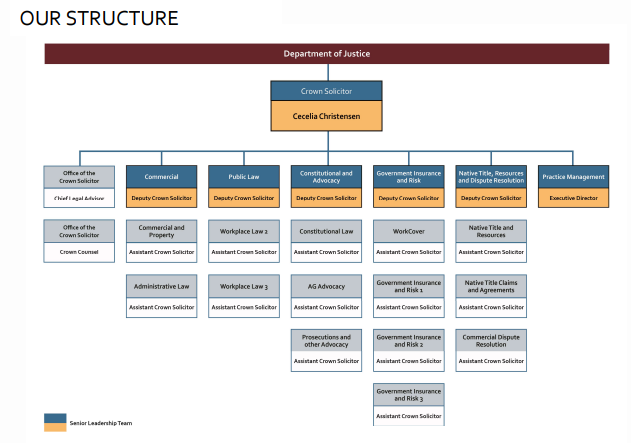
Crown Law is undergoing exciting transformation under Crown Solicitor Cecelia Christensen. There’s momentum, opportunity and a real focus on delivering contemporary, client-focused legal services to government.

You’ll enjoy:

  • Strong, visible leadership with a clear direction
  • Flexible work arrangements with realistic and achievable billables
  • A collaborative culture that values diversity of thought and experience
  • Being part of a legal office committed to integrity, service, and the public good


A Career Move With Real Impact

No matter whether you’re coming from a private firm, government, or industry, Crown Law’s Workplace Law team offers scale and variety you won’t find elsewhere. With around 40 professionals, it’s one of the largest specialist workplace teams in Queensland — a place where diverse experience meets complex, high-profile matters and a genuinely supportive culture.


About the Roles

Crown Law’s Workplace Law team is recruiting at multiple levels including Senior Lawyer, Principal Lawyer, and Senior Principal Lawyer offering opportunities to shape some of Queensland’s most significant workplace relations, industrial, discrimination, and human rights matters. Acting for government departments, agencies, statutory bodies, and tribunals, you’ll work on complex and high-profile cases, including landmark proceedings and class actions rarely encountered in private practice. Whether you are ready to step into leadership or further hone your expertise, these roles promise stimulating, career-defining work alongside some of the most respected practitioners in the field.

Remuneration + Benefits

• Flexible working arrangements including part-time and work from home.
• Lower billable hour targets than private practice, giving lawyers space to focus on quality and complex problem-solving.
• A balanced culture, many lawyers work part-time and are encouraged not to exceed their contracted hours. The team prioritises capacity and wellbeing.
• Leave loading + 12.5% superannuation.
• Generous parental leave after 12 months and long service leave after seven years.
• Discount corporate private health insurance.
• Corporate health and wellbeing program.
• Family and lifestyle friendly leave including an additional day during Christmas shutdown.
• EAP and counselling support; 
and
• Salary packaging options also available.

Who Should Apply

These roles are ideal for employment and workplace relations lawyers who are serious about their careers and want to contribute to work of real significance. Whether you are an experienced Senior Lawyer ready to take the next step, a Principal Lawyer seeking greater leadership responsibility, or a seasoned practitioner prepared to operate at the Senior Principal level, you’ll thrive in this team if you enjoy complex, high-profile matters, collaborating with government clients, and making an impact on issues that shape Queensland.


We’re looking for someone with:


  • At least 4 years' post-admission experience, with a background in employment, industrial relations, or discrimination law;
  • Strong legal research, analysis and problem-solving skills;
  • Excellent drafting and advocacy ability, with tribunal or court experience desirable;
  • Effective communication skills, able to deliver clear, practical advice;
  • Collaborative approach, with the ability to contribute to team capability and support peers; and
  • We also welcome applications from lawyers in employee-focused firms who are keen to transition to advising and representing employers.
  • For the Principal Lawyer and Senior Principal Lawyer positions we are looking for individuals with supervisory and/or leadership experience. 


Why work with Alex Correa Executive

These roles are exclusively managed by Alex Correa Executive. We’ve partnered with Crown Law for many years and understand what success looks like in this environment.


Whether you’re actively applying or simply exploring what’s next, we’re here to help you make a decision that’s right for you. 


Want to know more about pivoting your career into government?

Take a read of our most recent article below on "Why a career in government may be your next best career move?"

By Alex Correa July 2, 2026
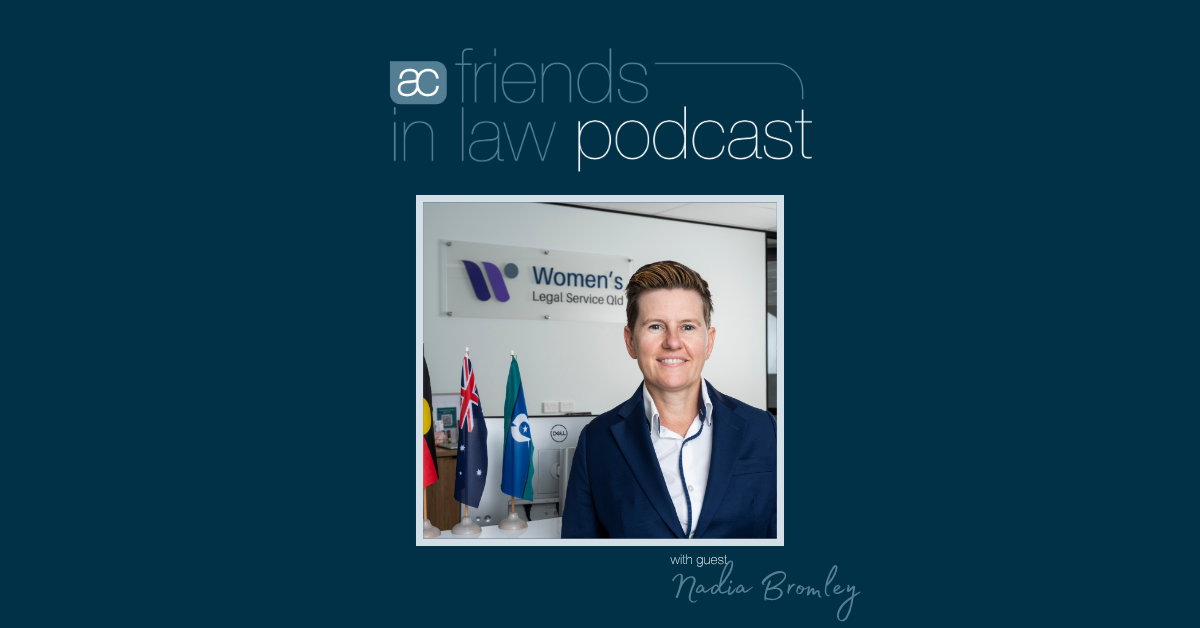
In this article, we explore why informed, considered decision-making matters at every stage of a legal career. We look at practical ways to approach career decisions, including how asking better questions can reveal the information that matters most. We also share how one lawyer’s thoughtful decision-making opened the door to an exciting career in projects law, from Abu Dhabi and beyond. Most lawyers can trace their career back to a decision made early, and often, made quickly. For some, it was inspired by courtroom dramas or the influence of family already in the profession. For others, it was a more pragmatic choice. But as many will admit, that first decision to study law is rarely made with a full understanding of what the career actually involves day to day. And that is where the challenge begins. Because from that point on, a legal career is shaped by a series of decisions. Practice area. Firm. In-house versus private practice. The right time to move. The right people to learn from. The question is not whether those decisions matter. It is whether they are being made well. Better decisions start with better questions In The Book of Beautiful Questions by Warren Berger, there is a simple but powerful idea. The quality of your decisions is directly linked to the quality of the questions you ask. A good question acts like a torch in a dark room. It does not give you the answer immediately, but it illuminates the right areas so you can find it yourself. In a legal career decision context, that might look like: ● What kind of work will I actually be doing in this new role in the first 6 to 12 months? ● How will this role develop me beyond my current capability? ● Does this environment support mistakes as part of learning, or penalise them? Too often, lawyers focus on surface-level questions. Salary. Title. Brand name and reputation of the firm. Those matter, particularly in the current cost-of-living environment, but they are unlikely to be the factors that determine whether a move is successful two or three years down the track. There is no single “right” way to decide In our many years of legal recruitment in the Queensland legal market, we have found that decision making is a very individual skillset, and lawyers approach decision making in all sorts of different ways. Some take a highly structured path. They map the market, speak to multiple firms, engage mentors, and weigh up detailed pros and cons. In one recent example, a lawyer spent three months exploring options, meeting multiple teams, and workshopping final offers with trusted advisers before making a call. Others take a more intuitive approach. They meet a team, get a sense of the culture, and make a decision based on how it feels. That instinct is often shaped by time invested in informal data gathering, conversations, and observations along the way. Both approaches can work. What matters is not whether the process looks analytical or intuitive on the surface, but whether you are asking the right questions and aligning the decision to where they want to go longer term. Georgia’s decision: instinct, but not without intent In our recent Friends in Law Podcast episode, we interviewed Projects Lawyer Georgia Huf. The delicate balance between instinct and informed decision making came through in our discussion about her initial move into construction law. On the surface, it might be described as a “gut decision”. She was drawn to the nature of the work, particularly its grounding in contract law and the tangible outcomes it delivers. Construction law offers something many lawyers look for but struggle to define early in their career: the ability to see your work translate into something real. Georgia actively sought out environments where she could learn. She placed importance on being surrounded by strong mentors, being given the opportunity to draft, make mistakes, and improve. That “safe place to learn” became a critical factor in her development. She also made deliberate decisions to broaden her exposure. Her advice to junior lawyers is simple but often overlooked: take full advantage of rotations. Understanding how matters play out end to end makes you a better lawyer, particularly in transactional work where poor drafting upstream can create significant issues later. Even her later decision to move overseas to Abu Dhabi followed a similar pattern. It was opportunistic, sparked by a conversation (and a LinkedIn message from a recruiter – yes, you should respond to those!) rather than a long-term plan, but grounded in clear motivations. Professional growth. Exposure to large-scale projects. Broader life experience. The common thread is not in the decision-making method. It is the clarity behind the decision. You can listen to Georgia’s full interview here. The risk of getting it wrong and why that is often overstated Lawyers are trained to identify risk. Naturally, that carries over into career decisions. What if the role is not what was promised? What if the team is not the right fit? What if the move sets me back? These are valid concerns. There are real examples of experienced practitioners stepping into partnership roles that did not meet expectations and having to move on quickly. But there is another risk that is often less discussed. Doing nothing. Career paralysis is a genuine issue in the legal profession. Waiting for the perfect role, the perfect timing, or complete certainty can stall progression just as much as a poor move. A useful way to reframe this is through a simple model introduced by James Clear, the author of Atomic Habits: ● Some decisions are like a hat. Easy to change. ● Some are like a haircut. They grow out over time. ● Very few are like tattoos. Truly permanent. Even decisions that feel significant, moving in-house, changing firms, going overseas, are rarely irreversible. The Queensland market continues to see alumni hires returning to the fold and lateral moves that correct career courses. The focus should be on making a considered decision, not a perfect one. There will always be compromises to be made along the way. Beyond salary: what drives long-term outcomes It is hard to ignore salary, particularly in the current high-pressure, cost of living environment. But decisions driven purely by remuneration tend to create issues later. Higher pay can sometimes come with trade-offs. Limited development. Repetitive work. Environments that are not sustainable long term. And once a certain salary level is reached, it can become difficult to move without taking a step back if the underlying experience does not support it and is not highly valued outside your organisation. The more effective approach is to assess roles on three dimensions: ● The quality and complexity of work ● The people and mentorship available ● The alignment with longer-term career direction Salary sits alongside these factors, not above them. The huge role of timing and personal context A sound decision is not made in isolation from personal circumstances. A role that might be ideal from a technical perspective may not be sustainable for someone managing young children and late-night global conference calls. Conversely, a move that offers flexibility and balance at the right stage of life can be a strategic decision, not a compromise. Timing matters. So does self-awareness. The most effective decisions tend to come from lawyers who understand what they need at that point in their career, rather than what they think they should want. There is More than One Way One of the most consistent themes across experienced lawyers is that careers are not shaped by a single defining decision. They are shaped by a series of decisions, each informed by better questions, stronger self-awareness, and accumulated experience. As Georgia said to us in her episode of Friends In Law, seek advice, listen to perspectives you trust, but ultimately make the decision that is right for you. Trust your judgement. For lawyers considering their next move, consider this: ● Do the work to ask better questions. Particularly in an interview setting [AC1] ● Gather the right information. ● Understand what matters to you now and where you want to go longer term. Then make the decision. Because in most cases, the bigger risk is not making the wrong move. It is not making one at all. If you are considering a move, or simply want to understand how you are positioned, it is worth taking a more strategic approach to your next step. If you are looking for your next ideal step in the legal market, then reach out to find out how we can help you build the career you aspire to. Get in touch here. 
By Alex Correa July 2, 2026
In this article, we discuss how important strategic and intentional personal branding is to differentiate lawyers in a complex QLD legal recruitment market. We touch on the concepts of quiet confidence and quiet influence and how they intersect and add value to your career. Find out how to truly understand your own values and how that builds trust with clients and colleagues. If you have been keeping an eye on the market, you have probably noticed something. There are many career opportunities available, but they do not always feel straightforward to access. That is because the Queensland legal hiring market is not behaving in the way people expect. Traditionally, hiring demand in law has followed economic cycles. When conditions are strong, transactional work increases. During downturns, disputes and insolvency tend to take the lead. At the moment, that pattern is not holding. Across Queensland, there is strong demand in construction, property, corporate, commercial and litigation, along with continued strong activity in family law. What stands out is that transactional work remains busy despite economic tightening, while insolvency, unexpectedly, is not seeing the same level of demand. At the same time, firms continue to experience a shortage of high-quality candidates, particularly at both junior and senior associate level. So, while the market is highly active, it is also candidate tight. Why the Process Feels More Difficult Than It Should Despite the level of demand, many lawyers are finding that securing the right role is not as simple as it once was. One of the key reasons is that firms are hiring with far more precision. It is no longer enough to demonstrate strong technical capability. Firms are thinking carefully about how a new hire fits into the broader picture. They are assessing the type of work that needs to be done, how that work is currently distributed across the team, and what capability gaps genuinely exist. They are also considering long term structure, future leadership pathways, and alignment with firm values. At the same time, candidates are approaching their careers with greater intention. Some are actively looking, others are open to the right opportunity, and many are simply curious about what might be possible. Regardless of where they sit, most have a clear idea of what they want from their next role. Flexibility, quality of work, culture, and career progression all feature strongly in their wish lists. The difficulty is that these preferences do not always align neatly with where demand sits. That tension is what makes the current market feel complex. The Shift Beyond Technical Excellence Another significant change is what firms now value most. Technical ability is still important, but it is no longer what sets candidates apart. Increasingly, firms are looking for lawyers who can communicate effectively, manage stakeholders, think commercially, and build strong professional relationships. There is still space for highly technical specialists, but fewer opportunities compared to those who can combine technical strength with broader influence. This is particularly evident at more senior levels, where leadership capability and the ability to contribute to the growth of a practice are becoming essential. What Actually Makes a Candidate Stand Out In practice, at Alex Correa Executive, we have found that the candidates who stand out tend to demonstrate a broader contribution to the profession. They are involved in industry groups, contribute to publications, mentor junior lawyers, and show an interest in developing their networks. More importantly, they have a clear sense of who they are and what they value. That clarity comes through in how they communicate, the decisions they make, the communities they are part of and the consistency of their actions over time. One recent example comes to mind. A candidate we worked with created a strong impression through a number of conversations before they had sent us their CV. When the CV did come through, it reinforced everything that had already been established. It was thoughtful, well structured, and communicated their experience with clarity. What stood out most was not just their legal work, but their long-term commitment to coaching and mentoring outside of their role. They did not list their values explicitly, but they were evident. Leadership, community, and a genuine investment in others came through clearly. That level of alignment builds trust, and trust plays a significant role in hiring decisions. The Cost of Misalignment The opposite is also true. When a role does not align with a lawyer’s values, it can become unsustainable, even if it appears to be a good opportunity on paper. In recent years, we worked with a lawyer who was in defendant insurance. This lawyer was instructed by his firm to prolong a legitimate claim involving a terminally ill individual. While the work may have been legally sound, it conflicted strongly with the lawyer’s personal values. Over time, that disconnect became too significant to ignore. A move into construction law, where the work felt more aligned and meaningful, changed the trajectory of their career entirely. It is a reminder that long term career satisfaction depends on more than just the work itself and the importance of values alignment. Quiet Confidence and Influence Confidence in the legal profession is often misunderstood. It is easy to assume it belongs to the most vocal person in the room, the one who speaks first and most often. In reality, the lawyers who leave the strongest impression are rarely the loudest. Quiet confidence has a different quality to it. It is the presence someone carries into a room before they have even spoken. It creates a sense of credibility and composure that draws people in, rather than competing for attention. It shows up in judgment. Knowing when to contribute, when to listen, and what is worth saying. It is grounded in self-awareness and a clear understanding of one’s role in the conversation. It is not about holding back, nor is it about dominating. It is about choosing the moment and delivering with intent. Importantly, quiet confidence is not passive. It does not mean being spoken over or sidelined. Some of the most effective lawyers are those who can assert a position, whether legal or commercial, with clarity and calm authority. They understand how to frame an argument so that it lands, not just intellectually but persuasively. This is where quiet confidence intersects with quiet influence. The ability to guide a discussion, shape a decision, or move a matter forward without force. Influence is built on trust, consistency, and credibility rather than volume. In many cases, this capability is developed over time. Experience plays a role, but so does exposure to the right mentors. The best mentors are often those who demonstrate that influence does not require performance. They model restraint, precision, and timing. They show that carefully chosen words, delivered at the right moment, carry far more weight than speaking for the sake of being heard. For lawyers thinking about their own development, quiet confidence is less about changing who you are and more about refining how you show up. It is built through consistency, self-awareness, and a deliberate approach to communication. Over time, it becomes one of the most defining traits of trusted advisers and future leaders in the profession. Reframing Personal Brand Personal branding is another concept that can feel uncomfortable, but it is worth reframing. Every lawyer whether they recognise it or not, already has a reputation. The difference is whether it is being shaped intentionally. Essentially, you either make a deliberate and conscious decision to build your personal brand over time, or it gets developed for you by others in the absence of any strategy. A personal brand is not about self-promotion. It is about clarity, authenticity, and consistency. It is reflected in how you communicate, the work you prioritise, how you contribute to your team, and how others experience working with you. If you do not define it strategically, you create a vacuum in which others will. The Queensland legal market is full of opportunity, but it is also more complex than it has been in previous years. Being a strong lawyer is no longer enough on its own. The candidates who navigate this market most effectively are those who understand their values, can articulate their strengths, and are clear about what they want next. They exert quiet confidence and walk proudly in their sphere of quiet influence. Their brand is aligned with their career plans, and they are authentic in their interactions with peers, colleagues, clients, and all they encounter. That might sound like a lot, but I talk to a number of lawyers every day that are navigating this exact path with grace, wisdom and hard-won skills and experience. If you are struggling to articulate your own values or to be clear about who you are and how you make people feel when they interact with you, then I encourage to you listen to the latest episode of our podcast Friends in Law. In it Jason Malouin from Superpower Portraits talks about branding, belief, differentiation, and why trust is not something you manufacture, but something that grows when you remove uncertainty. If you have ever struggled to explain your value without sounding rehearsed, overly polished, or like everyone else in your field, this conversation is for you. You can listen here , and Jason’s values exercise is included in the show notes. In a complex recruitment market like we are experiencing, alignment is what drives the best outcomes. If you are considering a move, or simply want to understand how you are positioned, it is worth taking a more strategic approach to your next step. If you are looking for your next ideal step in the legal market, then reach out to find out how we help you build the career you aspire to. Get in touch here.
Show More